
At work in the ruins
Dec 15, 2025
At the beginning of November I was a guest at the Rotterdam Change Days. Started as the Berlin Change Days about 15 years ago, this event is now moving from place to place and also happening online.
This year's theme was "At Work in the Ruins," taken from the book of the same title by Dougald Hine, who was the keynote speaker.
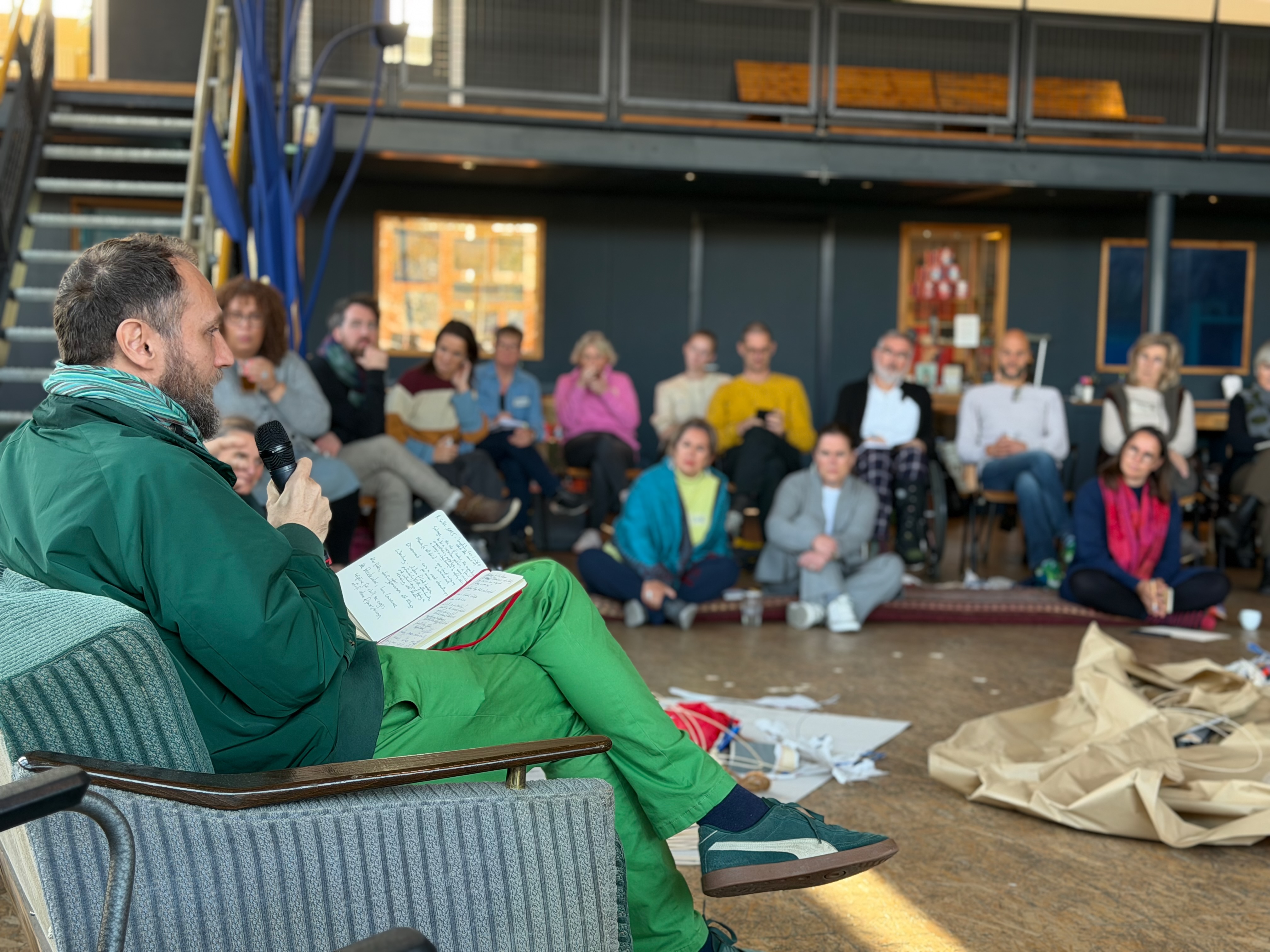
The book focuses on climate change and is currently on my READ IT NOW list. In his keynote, he spoke about how we need to change our perspective of the current poly-crisis from being a problem to realising it is a predicament.
While a problem has a solution and is therefore fixable, a predicament is more complex. To be "at work in the ruins" means we need to first accept this mess we're in. This makes me wonder deeply how to engage with those too tired now to engage and even to listen.
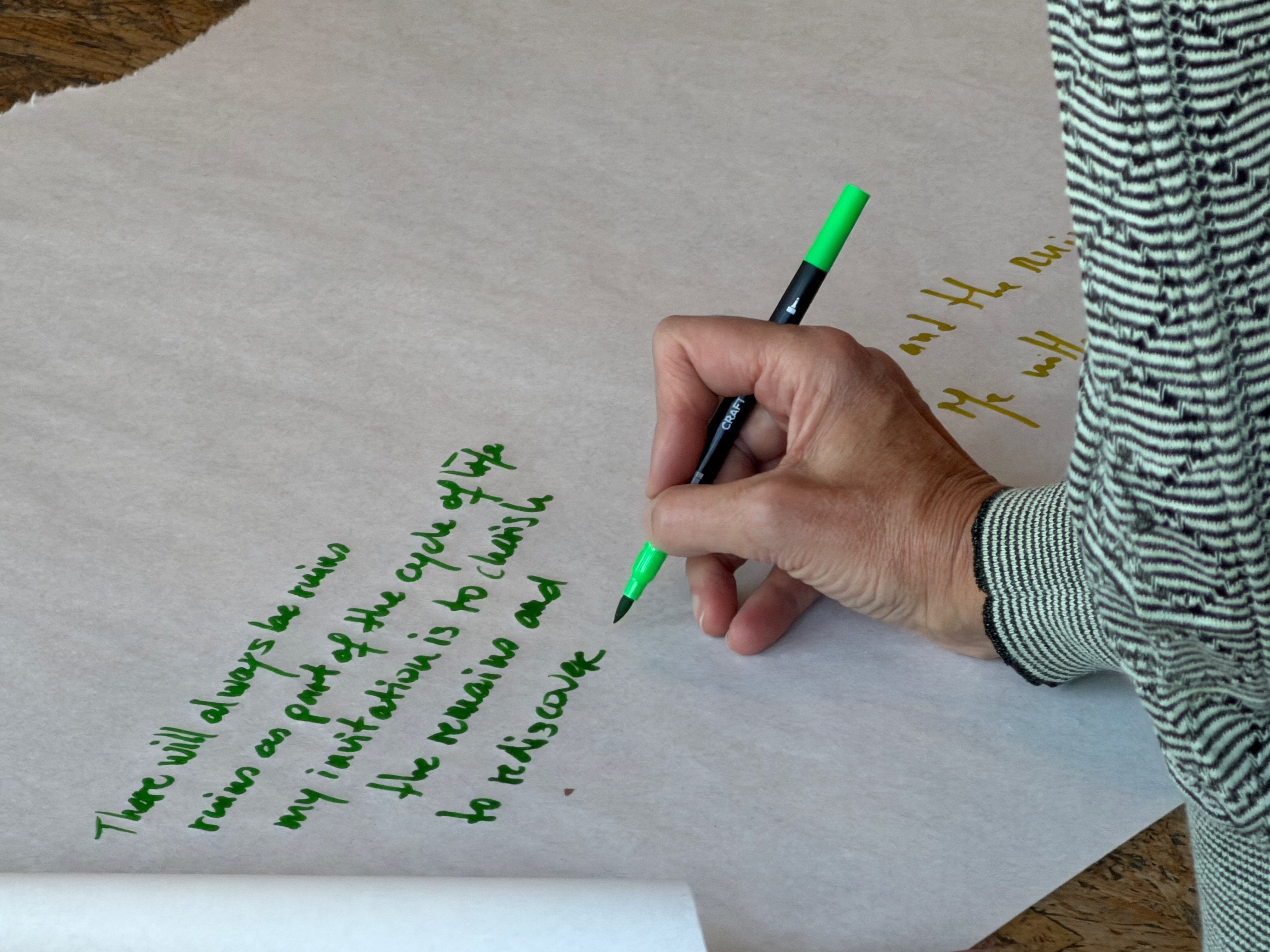
As story colleague Joanna Sell reminds me that the ruins many of us face is unlike the very desperate ruins in many other places: "Our ruins are rather those caused by utilitarianism, an aggressive form of capitalism, lack of meaning and lack of beauty. The world where storytelling exists as a machinery to earn more money. 'Stories sell' is the worst sentence I keep hearing."
Hine suggests there are four key tasks we need to take up to be at work in the ruins:
- Salvaging what can still be used, even recovering older processes and ways of being that can be useful once more. What do we want to bring with us?
- Mourning what is going and will not return. This is about letting go. Most heartening to me was the reminder that the mourning stage is a time to sing the old songs and tell the old stories. We need to do this to remind ourselves of what has come before and to give ourselves courage for what is coming now. They are seeds for the future.
- Discerning what is still useful and what we have told ourselves is useful but isn't really.
- Weaving together the dropped threads that make the difference.
Hine said the work lies in practicing moving from the unimaginable to the impossible to the possible (and the other way around for practices we'd like to get rid of).
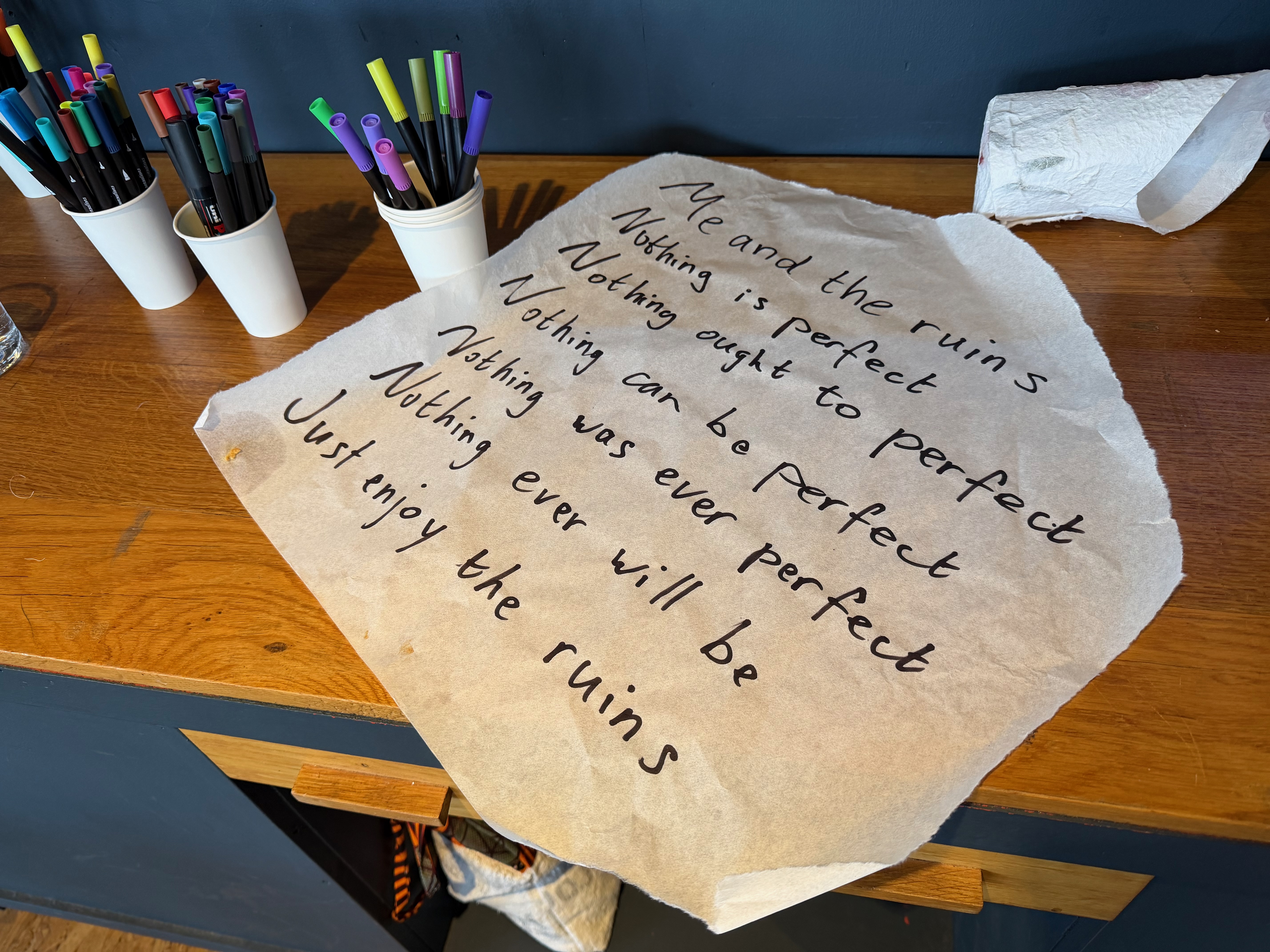
On the final day I missed my tram and while I waited, begin to work on these four tasks from the perspective of story and our narrative field of practice. It was one of the most enlightening personal brainstorms I've experienced in recent years.
Here is a selection of what "at work in the ruins" from a story perspective prompted in me:
Salvaging
- The storyteller inside every human
- The old practices of deep listening / witnessing
- The craft/art/mystery of storytelling
- A focus on stories that help us survive and thrive together (which is why humans create stories in the first place!)
- Love of language
- The storyteller as culture holder, curator and ambassador for humanity -- in indigenous communities the storyteller held the histories and the mysteries to remind us where we came from and how to be good humans
Mourning
- The abuse of stories for power and control
- Refining the art of manipulation and commodification
- Stories as fast food/soundbite fodder
- Losing the roots of our mythology and the deep archetypes which populate the human psyche
- Humans as part of nature -- the story of separation / domination / exploitation and "them" against "us" that has grown from teh myth of separation
- Enacting our story of conscious closure -- how the first world has tried to separate life and death
- That we cannot somehow allow ourselves to sit by the River of Grief together for long enough for the deep sorrow stories we are carrying hidden within us to wash through us and flow on
Discerning
- The true gold of lived experience and the power of listening as love in action to mend the brokenness as a form of human kintsugi
- What is mine / ours to do -- what story do we want to live in? What are we prepared to live into? What makes a truly generative story and what are our stories of warning?
- How to grow our discernment of what we allow to live within and through us?
Weaving
- What are the story shards that now need to be woven together to create a more solid and beautiful net for our collective generative future? (I was thinking here of Indra's Net, which in mythology had a jewel at. each intersection, reflecting every other jewel and all of creation)
- The future for story itself and how this deepest attribute of human consciousness, subconscious and learning can be reclaimed for these times
- What disparate worldviews need to be re-storied and then rewoven into a braided river for humanity's moving towards the sea of collective consciousness?
This musing moved me and made me deeply thoughtful. When others did not speak at the closing, I did, sharing with them that I needed enough storytelling between us to create stronger threads of relationship. I had wanted to sit by the River of Grief with them because grief is not an individual process but a collective one. And most of all, I wanted practice companions as the times get harder to remind me who I want to be and why I am called to this work.
There is a growing call for "safe harbours" where people can come to rest and dive deep together. Perhaps some of our work in the ruins can use these lenses as a way to begin that journey together.
What happens when you look at your work/your field through these lenses?
Isn't it time to have a brilliant ally on your side?
Subscribe to my newsletter for the latest about the power & practice of story.
We hate SPAM. We will never sell your information, for any reason.